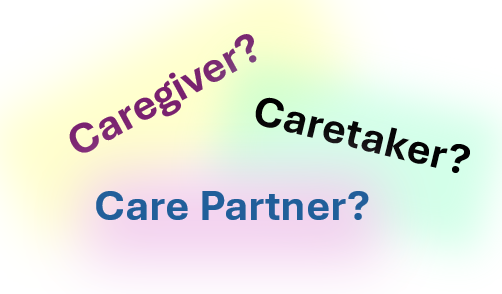
When involved in the care of another person, what do you call yourself? Caretaker? Caregiver? Care Partner? Something else? It matters because they are not the same. Knowing your role helps in managing expectations—yours and the person(s) needing your care.
Labels usually help define roles. In this case, current labels trouble me by suggesting boundaries where reality is porous. Often-cited distinctions are:
Caregiver
Focused on physical and emotional support (bathing; feeding; lifting mood), and management of medical needs (medications; appointments)
Emotionally invested in preserving patients’ independence and sense of self
Caretaker
Focused on managing practical and administrative matters
Little emotional involvement beyond superficial
Care partner
Focused on facilitation of patients’ ability to contribute to meeting their physical and emotional needs
Emotionally invested in collaborative partnership with shared decision-making and mutual respect
Any of these roles can be informal or professional, paid or unpaid, done out of love or a begrudging sense of obligation.
Advantages of the term “care partners” include an outlook that:
Reduces power differences
Promotes trust
Preserves patients’ dignity.
Practically, when patients have a voice in what’s happening, everyone benefits from an understanding of patients’ experience, needs, and capabilities. Things can be done in a more personalized way that avoids:
Taking over unnecessarily and causing loss of function due to disuse.
Leaving patients to do things they shouldn’t, causing pain or injury
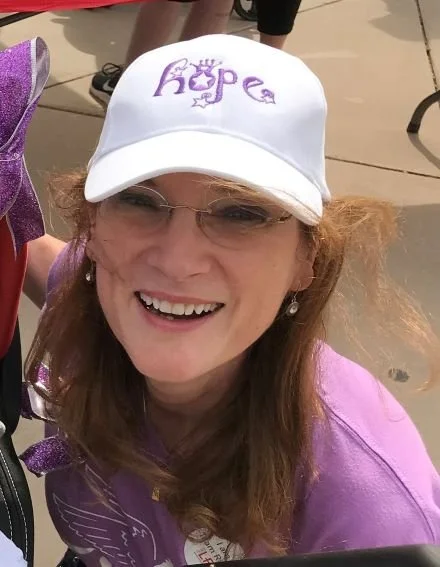
As a Healthy Survivor, I wish to be a care partner in my own care until I am incapable of contributing. This awareness drives my approach when I am caring for others.