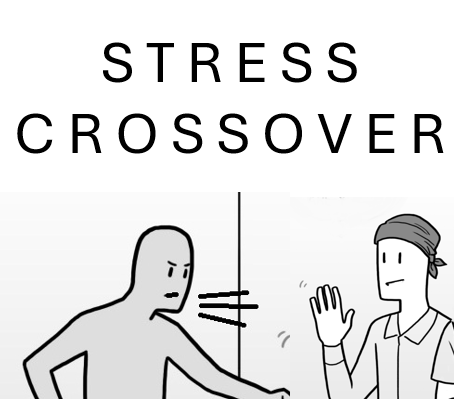
The stress and strain of caregiving can lead to what’s called “stress crossover” (or crossover stress): the people being cared for sense the caregiver’s stress and, in response, feel stress, too—as if the stress were transmitted.
It is understandable if tired caregivers get snippy when the person they are caring for has an accident two minutes after the caregiver finished cleaning up. Or if the patient asks the same question again and again (and again and again).
For patients who are cognitively okay, seeing their caregiver’s stress and then feeling stress themselves may cause feelings of hurt, guilt, anger, or other unpleasant emotion. The patient may lash out, withdraw, or anything in-between.
Patients with dementia who experience stress crossover may become agitated without understanding what’s happening. They are now harder to care for, which increases the caregivers’ stress, creating a cycle of escalating tension between caregiver and patient.
I did not bring up this topic to lay one more burden —or guilt trip—on caregivers. Rather, my hope is that by highlighting a common issue, caregivers may feel more motivation to heed the motto: